
If you are searching for how to clean a showerhead without vinegar, the good news is that it can be done safely and effectively using simple household items.
Baking soda, hydrogen peroxide, and mild dish soap can all help remove buildup without strong smells or harsh acids.
These methods protect your showerhead, your indoor air quality, and your comfort, especially if you prefer gentler cleaning solutions.
This guide explains why showerheads get dirty, how to clean them without vinegar, and how improving your water quality can reduce buildup over time.
Why Do Showerheads Get Dirty So Quickly?
Showerheads are exposed to warm water and moisture every day. This creates ideal conditions for buildup to form.
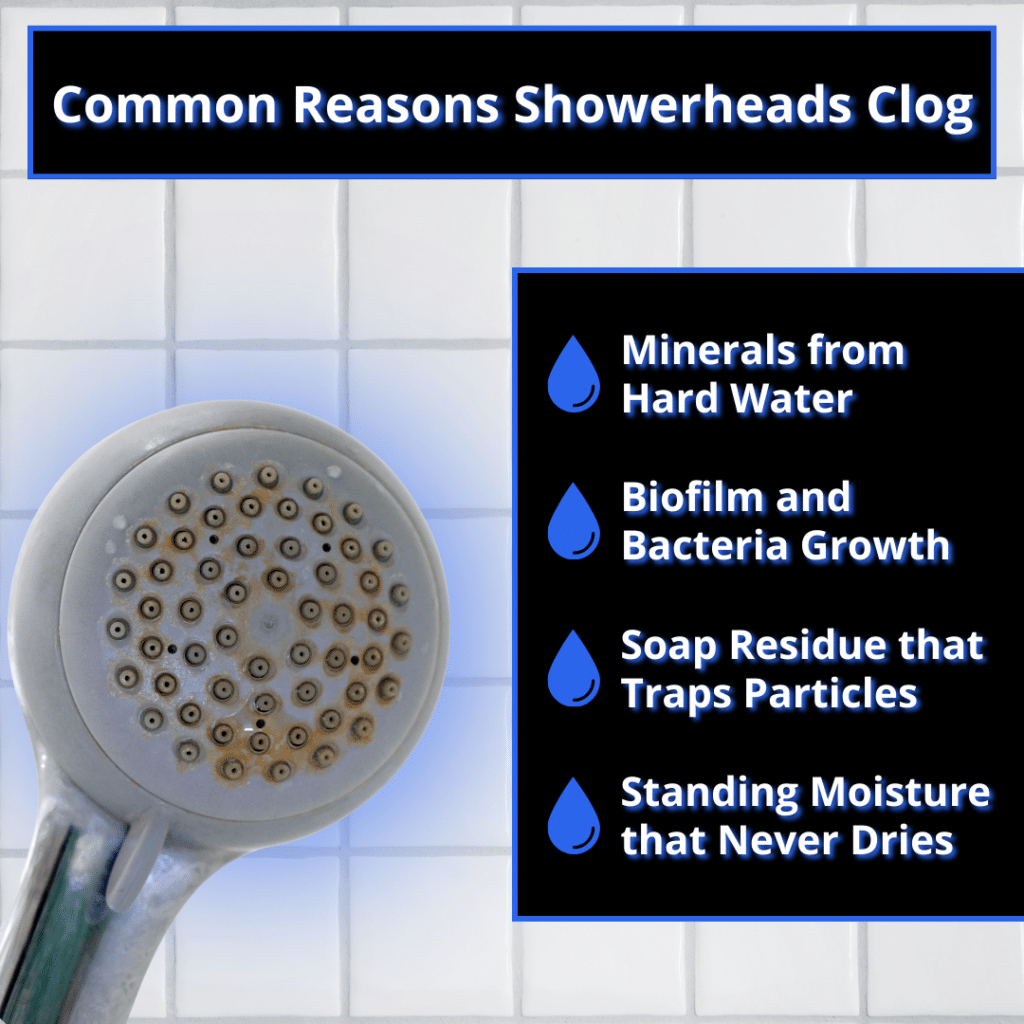
Common Reasons Showerheads Clog
- Minerals from hard water, such as calcium and magnesium
- Biofilm and bacteria that grow inside damp nozzles
- Soap residue that traps particles
- Standing moisture that never fully dries
The US Geological Survey reports that hard water affects about 85 percent of homes in the United States. When hard water evaporates, minerals stay behind and slowly build up inside fixtures.
Over time, this buildup can:
- Reduce water pressure
- Change spray patterns
- Affect water cleanliness
Is It Safe to Clean a Showerhead Without Vinegar?
Yes. Cleaning a showerhead without vinegar is safe and often preferred.
Many homeowners avoid vinegar because:
- The smell is strong and lingers
- Acid can damage finishes
- It can irritate the skin or breathing
- It may not be safe for households with sensitivities
Gentler cleaning options are effective for routine maintenance and light to moderate buildup. They also reduce the risk of damaging modern fixtures.
Does Showerhead Material Affect How You Should Clean It?
The material of your showerhead plays a big role in how it should be cleaned.
Common Materials and Care Considerations
| Showerhead Material | Cleaning Concerns | Safer Options |
| Chrome | Acid dulls the finish | Baking soda |
| Stainless steel | Scratching | Hydrogen peroxide |
| Plastic | Chemical damage | Dish soap |
| Matte finishes | Peeling or spotting | Gentle soaking |
Using harsh cleaners can shorten the life of your showerhead. Choosing non-vinegar methods helps protect both appearance and function.
How to Clean a Showerhead Without Vinegar Using Baking Soda
Baking soda is one of the most popular vinegar-free options. It is widely available, inexpensive, and gentle enough for regular use.
Because it does not contain harsh acids, it can be used more frequently without risking damage to finishes or internal components.
Why Baking Soda Works
- Mild abrasive action
- Breaks down residue
- Safe for most materials
Best Situations for Baking Soda
- Light mineral scale
- Routine cleaning
- Regular maintenance
Baking soda works best when used consistently. Cleaning once every month or two prevents buildup from becoming harder to remove.
How to Clean a Showerhead Without Vinegar Using Hydrogen Peroxide
Hydrogen peroxide is especially helpful when bacteria are present. It works by breaking down organic material inside the spray holes, helping loosen residue that regular rinsing cannot remove.
This makes it useful for showerheads that show pink or black buildup, which is often linked to bacterial growth in damp environments.
Benefits of Hydrogen Peroxide
- Helps reduce bacteria and mold
- Odor-free
- Easy to rinse
When to Use It
- Pink or black residue
- Musty odors
- Shared bathrooms
This method supports better hygiene without the harsh effects of acid-based cleaners.
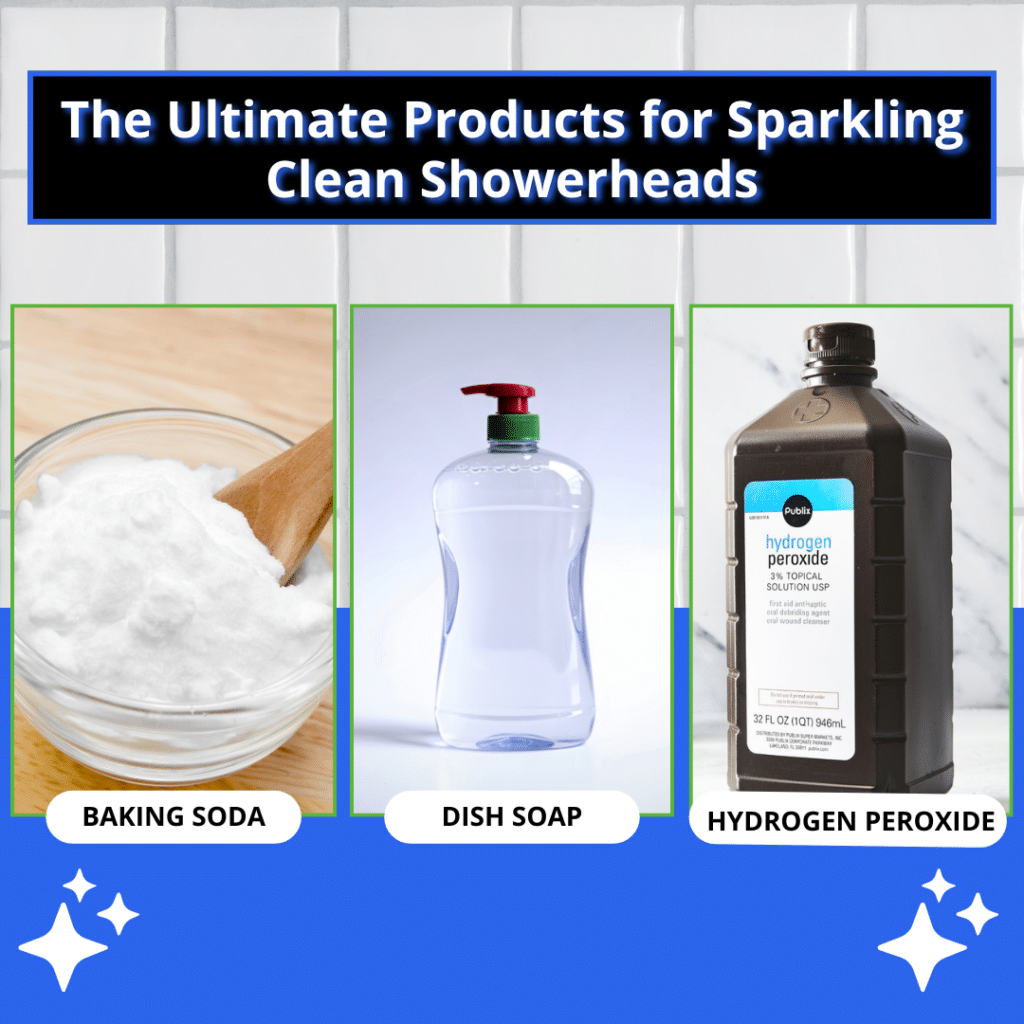
Can Dish Soap and Warm Water Really Clean a Showerhead?
Dish soap can help, but it has limits. It is designed to break down oils and residue, not mineral deposits. While it can improve appearance and remove surface grime, it does not dissolve hard water scale. This is why buildup may return quickly if dish soap is used alone.
What Dish Soap Removes
- Soap scum
- Oils
- Light residue
What It Does Not Remove
- Heavy mineral scale
- Long-term hard water buildup
Dish soap works best as a first step or for frequent light cleaning. If buildup returns quickly, the cause is likely mineral content in your water.
How Often Should You Clean Your Showerhead?
Most homes benefit from cleaning showerheads every 1 to 2 months.
You may need to clean more often if:
- Water pressure drops quickly
- White or chalky residue appears
- Spray holes often clog
In Harrisburg and nearby areas, water mineral levels can vary by neighborhood. Homes with untreated hard water usually see faster buildup.
How Water Testing Can Reveal the Real Cause of Showerhead Buildup
Repeated buildup often points to water chemistry issues. When minerals or bacteria are consistently present in the water supply, residue reforms even after careful cleaning.
This is a common sign that the problem starts inside the plumbing system rather than at the fixture itself.
Water Testing Can Identify
- Hardness levels
- Mineral content
- Bacteria presence
According to the USGS, mineral scale from hard water can reduce fixture efficiency and increase maintenance needs.
Water testing helps homeowners understand what is happening inside their plumbing and choose the right solution.
Why Showerhead Buildup Is Common in Central PA
Homeowners in Harrisburg and surrounding Central Pennsylvania communities often deal with faster showerhead buildup due to naturally occurring minerals in local water sources.
Much of the region relies on groundwater and surface water that contains elevated levels of calcium, magnesium, and iron.
These minerals are not harmful to drink, but they can leave visible scale behind as water dries on fixtures.
In many Harrisburg-area homes, this leads to:
- White or chalky residue on showerheads
- Frequent clogging of spray holes
- Reduced water pressure even after cleaning
- Buildup returning within weeks
Municipal treatment focuses on safety, not mineral removal.
As a result, hard water issues often show up first in bathrooms. Showerheads are especially vulnerable because they experience constant heat, moisture, and evaporation.
If you notice buildup returning no matter how carefully you clean, the issue is likely tied to your home’s water chemistry rather than your cleaning method.
How Hard Water Impacts More Than Just Your Showerhead
Showerheads are often the first place homeowners notice hard water problems.
Hard water can also affect:
- Faucets
- Appliances
- Pipes
- Water heaters
Mineral buildup inside plumbing can reduce efficiency and shorten the lifespan of fixtures. Addressing water quality early can help prevent costly repairs later.
When Cleaning Is Not Enough
Sometimes cleaning does not solve the problem.
Signs Replacement May Be Needed
- Cracked parts
- Uneven spray after cleaning
- Visible corrosion
These issues may also indicate water quality problems affecting the entire home.
How Better Water Quality Helps Keep Showerheads Cleaner
Improving water quality helps reduce buildup at the source.
Benefits of Improved Water Quality
- Less mineral scale
- Cleaner fixtures
- Better water flow
- Improved comfort
Water testing supports long-term maintenance and reduces how often cleaning is needed.
How Cleaner Water Can Improve Skin and Hair Comfort
Water quality does not just affect fixtures.
Hard water can:
- Leave residue on skin
- Make hair feel dull
- Increase dryness
Cleaner water supports better daily comfort, especially for people with sensitive skin.
Related Questions
Can hard water permanently damage a showerhead?
Yes. Over time, mineral buildup can clog internal parts and reduce water performance.
Is it safe to soak a showerhead overnight?
Gentle solutions are safer for longer soaking, especially for delicate finishes and drains.
Do filtered showerheads still need cleaning?
Yes. Filters help, but do not eliminate all buildup.
What causes black or pink residue?
This is often linked to bacteria growing in moist and moldy conditions.
Does water quality affect appliances?
Yes. Hard water can reduce appliance efficiency and lifespan.
How Enviroquest Helps Harrisburg Homeowners Reduce Buildup at the Source
While vinegar-free cleaning methods work well for maintenance, long-term buildup often requires a deeper solution.
Enviroquest helps homeowners in Harrisburg, PA, and surrounding Central Pennsylvania areas understand and improve their water quality through professional testing and treatment options.
Their services are designed to address the root causes of mineral buildup, not just the symptoms.
Enviroquest water solutions can help with:
- Identifying hard water and mineral levels through testing
- Reducing calcium and magnesium that cause scale
- Improving water flow and fixture performance
- Lowering maintenance needs for plumbing and appliances
When water quality is balanced, showerheads stay cleaner longer, spray patterns improve, and frequent scrubbing becomes less necessary.
For homeowners who prefer gentle cleaning methods and want to avoid harsh chemicals altogether, improving water quality is one of the most effective long-term solutions.
Conclusion
Knowing how to clean a showerhead without vinegar gives homeowners a safer and more comfortable way to care for their bathrooms. Non-vinegar methods are effective, gentle, and easy to use.
If buildup keeps returning, the issue may be your water, not your cleaning routine. For homeowners in Harrisburg, PA, and surrounding Central Pennsylvania areas, Enviroquest offers water testing and treatment solutions that help protect fixtures, plumbing, and daily comfort.