
Before you build a fire, it helps to understand how your fireplace works and why the flue makes such a big difference. Many homeowners are surprised to learn that a flue that is only partly open can still let smoke spill into the room. In some cases, the wrong airflow inside the home can even pull smoke back down the chimney.
This guide gives you clear steps on how to open a fireplace flue, what backdrafts are, why they happen, and how you can keep your home safe and comfortable every time you use your fireplace.
It also explains when simple fixes work and when deeper home air issues may be affecting the way your fireplace drafts.
Why Does Your Fireplace Flue Matter?
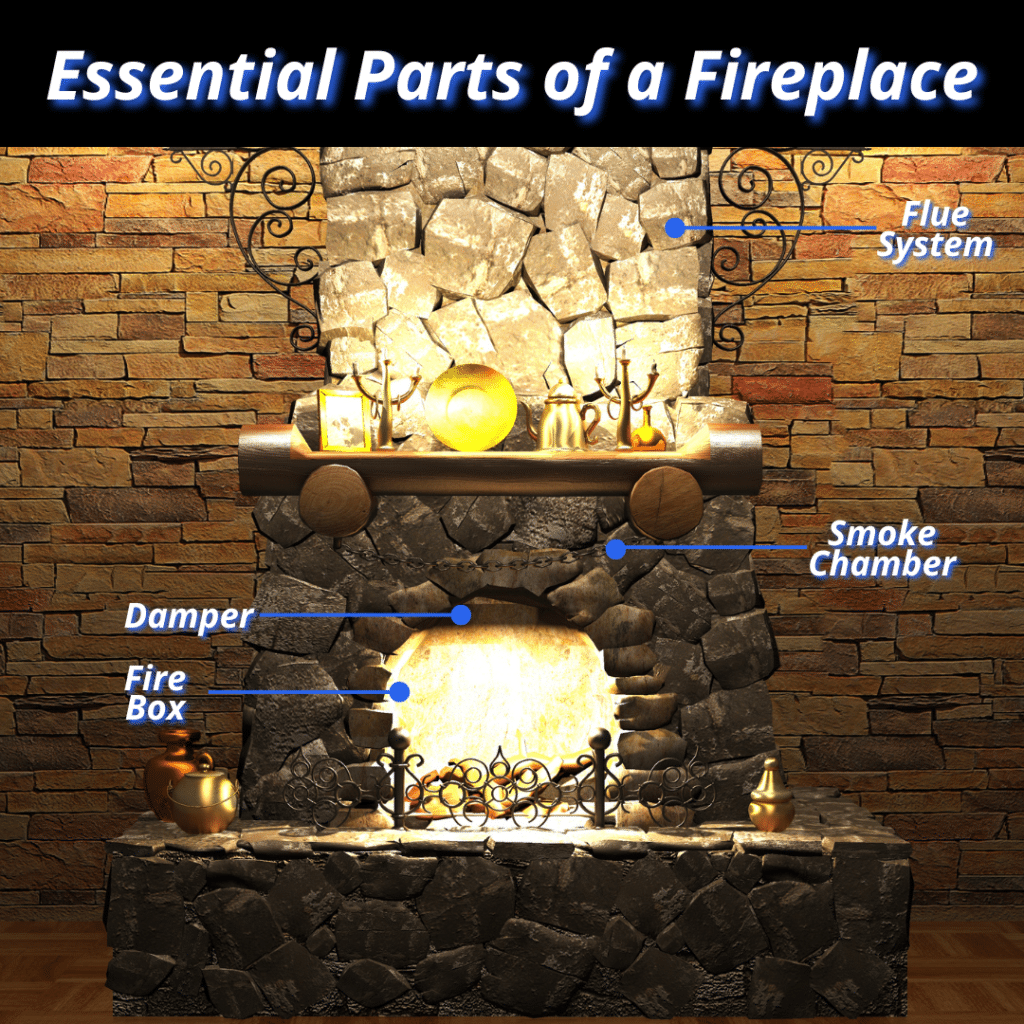
A fireplace flue is the channel that lets smoke rise from your fireplace to the outdoors. When it is open, air flows upward and carries smoke away. When it is closed, smoke has nowhere to go and can flow back into your living space.
According to the Environmental Protection Agency, fires confined to chimneys, flues, or flue burners accounted for 87% of residential building heating fires.
A closed or partly closed flue can cause a dangerous backdraft. A backdraft happens when air inside your home is pulled down the chimney instead of rising up through it. This pushes smoke or carbon monoxide into your home.
Backdrafts are more common during cold weather, in newer sealed homes, and in houses that have ventilation imbalances. These issues affect air quality and make your home feel smoky or stuffy.
Enviroquest often tests homes that have poor air movement around fireplaces. Even small drafting problems can lead to indoor air quality concerns, including elevated carbon monoxide or particles from smoke.
How to Know If Your Fireplace Flue Is Open
Before lighting a fire, it is important to confirm that the flue is fully open. Many homeowners assume it is open when it is only halfway. That half-closed position can still cause smoke to enter the home.
Here are simple ways to check:
Look Up the Chimney
Use a flashlight to look in the chimney. If you see a metal plate blocking most of the opening, the flue is closed. If the plate is pushed all the way to the side or straight up, your flue is open.
Feel for Airflow
Hold your hand above the firebox. If air is moving upward, the flue is likely open. If you feel cold air coming downward, it may still be closed, or the chimney may be too cold to pull air upward.
Use a Smoke Match or Incense Stick
Light it and hold it near the opening. If smoke rises the chimney, the flue is open. If it drifts back into the room, it may be closed, or the chimney may be cold.
How to Open a Fireplace Flue Step by Step
The steps depend on the type of damper your fireplace has. Here is how to open the most common kinds.
1. Throat Damper (Most Common)
A throat damper is located just above the firebox. It may have a lever, handle, or rotary knob.
To open a lever-style throat damper
- Look inside the fireplace and find the metal lever.
- Pull or push the lever until the damper moves to the fully open position.
- Use a flashlight to confirm that the opening is clear.
To open a rotary knob damper
- Turn the knob counterclockwise until it stops.
- Look up to make sure the metal plate is fully raised.
2. Top Mount Damper
A top-mount damper sits at the top of the chimney. It typically uses a pull chain.
To open a top-mount damper
- Locate the chain inside the firebox.
- Release the chain from the hook to let the damper spring open at the top.
- You should hear or feel it open.
- Pull gently on the chain to confirm no resistance.
3. Flue Doesn’t Move or Feels Stuck
If the damper does not move easily, it may be rusted, warped, or blocked by debris. Do not force it. This could cause damage or hide a larger problem, like a nest or creosote buildup.
Why Do Backdrafts Happen?
A backdraft occurs when the air pressure inside the home is lower than the pressure inside the chimney. When this happens, air chooses the path of least resistance and enters the home instead of rising out of the chimney.
Here are common causes:
Cold Chimney Flue
Cold air is heavy. If the chimney is cold, air can settle inside it like a plug. When you start a fire, smoke hits the cold air and gets pushed back down.
Tightly Sealed Homes
Newer homes have strong insulation and sealed windows. This reduces natural airflow and can cause negative pressure zones.
Vented Appliances Running Nearby
Kitchen exhaust fans, clothes dryers, or bathroom fans can pull air out of the house. This can draw chimney air into the room.
Wind Direction
Wind blowing at certain angles can push air down the chimney, especially in two-story or hillside homes.
A backdraft can bring smoke, soot, and carbon monoxide into your home. Carbon monoxide exposure is a serious risk that can affect your health.
Enviroquest often identifies these issues during indoor air quality tests and radon mitigation in Central Pennsylvania homes, especially older homes with aging fireplace systems.
How to Avoid Dangerous Backdrafts While Using Your Fireplace
Here are simple ways to prevent backdrafts and help your chimney draft well:
1. Preheat the Flue
Preheating helps create upward airflow. Roll a piece of newspaper, light it, and hold it near the flue opening for 30 seconds. You should see smoke rising upward once the chimney warms.
2. Open a Window Slightly
In a tightly sealed home, cracking a window near the fireplace helps balance pressure.
3. Start with Small, Dry Kindling
This produces quick, clean heat that warms the chimney faster.
4. Check for Competing Appliances
Turn off kitchen vents, clothing dryers, or bathroom fans before lighting a fire.
5. Keep the Fireplace Area Clean
Debris or ash buildup restricts airflow.
Common Reasons Your Flue Isn’t Drafting Properly
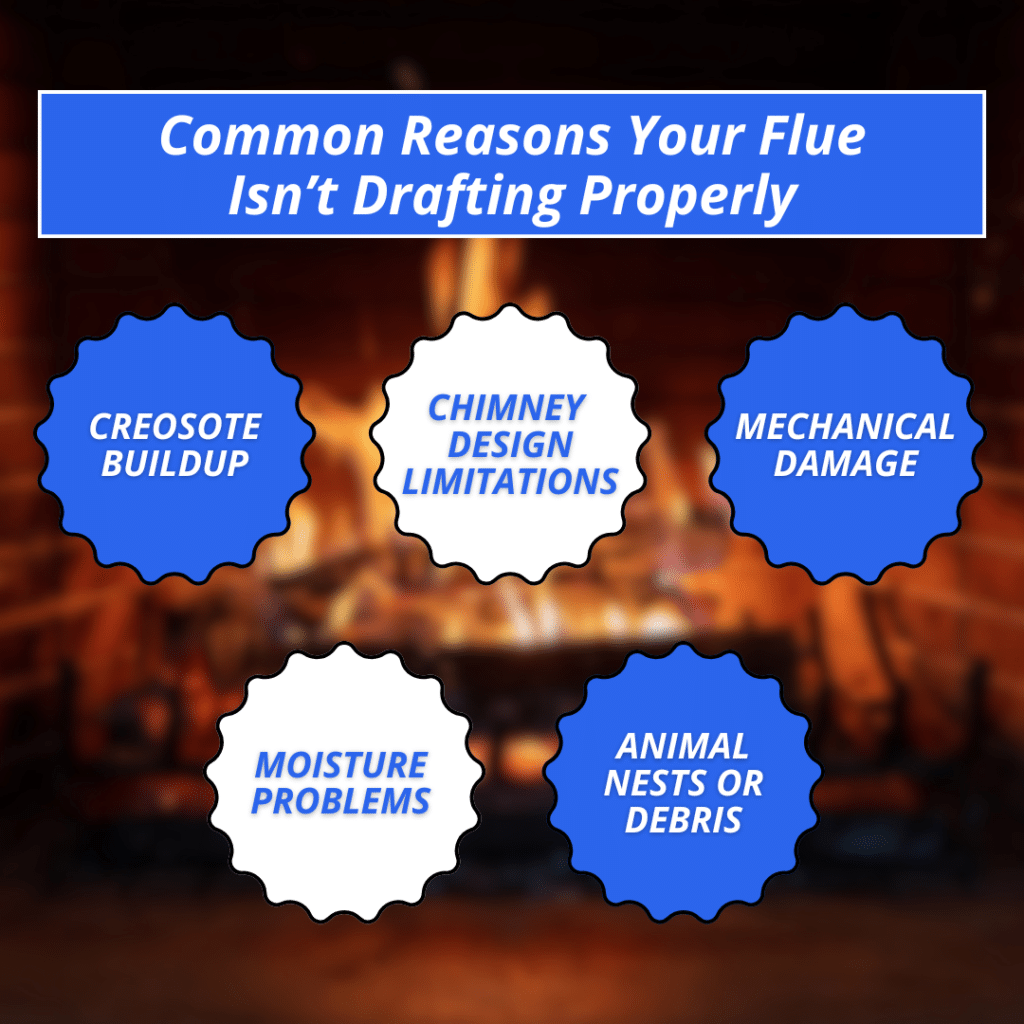
Sometimes, even a fully open flue does not draft well. This may point to a deeper issue.
Here are common causes:
Creosote Buildup
Creosote is a sticky residue from burning wood. It coats the flue and reduces space for airflow.
Animal Nests or Debris
Birds, squirrels, and raccoons often build nests in chimneys.
Mechanical Damage
A bent or warped damper can block proper opening.
Chimney Design Limitations
Short chimneys or wide flues can draft poorly because they do not create enough upward pull.
Moisture Problems
Moisture problems around a chimney can affect drafting and point to larger issues inside the home. This sometimes connects to mold concerns.
If you notice any of these issues, a chimney professional can inspect for blockages. Indoor air quality testing may also help identify hidden problems caused by smoke, soot, or pollutants returning into the home.
Safety Tips Before Lighting Any Fire
Use this simple checklist to stay safe during fireplace season:
| Safety Step | Why It Helps |
| Confirm the flue is open | Prevents smoke and fumes from entering the home |
| Use seasoned wood only | Reduces smoke and creosote buildup |
| Keep flammables away from the firebox | Prevents accidental fires |
| Test carbon monoxide detectors | Detects CO before it becomes dangerous |
| Check smoke alarms | Ensures fast detection of fire or smoke |
| Have a yearly chimney inspection | Removes creosote and debris that block the flue |
A clean and well-maintained fireplace supports better air quality and a safer home environment.
How Enviroquest Helps Improve Fireplace Safety and Air Quality
Many drafting issues do not start inside the fireplace. They often begin with air movement problems inside the home.
Enviroquest can help with:
- Indoor air quality testing
- Mold testing and inspections are conducted when moisture problems affect the fireplace area
- Radon testing for homes with lower-level fireplaces
- Environmental assessments when smoke or soot may affect health
Homes in the Harrisburg and Central PA region often have older fireplaces or unique chimney designs.
These differences can make flue problems more common. Testing can help homeowners understand the full picture of what is affecting indoor air.
Related Questions
What causes smoke to enter a room even when the fireplace flue is open?
Smoke can enter the room when the home has poor airflow, a cold chimney, strong outdoor winds, or competing vents running nearby. Even with an open flue, the air may flow downward instead of upward.
Why do fireplaces in basements struggle to draft correctly?
Basements sit below ground level, which creates natural pressure problems that pull air downward. This makes it harder for smoke to rise up the chimney, even when the flue is fully open.
How often should a chimney be inspected to prevent airflow issues?
Most chimneys should be inspected at least once a year to remove buildup, check for damage, and make sure the flue can open and draft properly.
Conclusion
Knowing how to open a fireplace flue the right way helps you enjoy a cleaner and safer fire. It also protects your home from smoke, drafts, and air quality issues.
If you ever notice signs of poor airflow, unusual smoke patterns, or comfort problems during the winter, your home may need a deeper indoor air evaluation.
If you have concerns about backdrafts, air quality, or unusual smoke in your home, Enviroquest can help you identify the cause with clear testing and expert guidance. Reach out to schedule a home inspection and an indoor air quality evaluation.