
When you think about home maintenance in Central Pennsylvania, your mind probably goes to winterizing your pipes or checking your roof after a heavy storm. However, there is a silent, invisible factor that is just as important for your safety as a working smoke detector. If you are wondering what a radon test is, you are already taking a great step toward protecting your family.
Radon is a naturally occurring radioactive gas. It comes from the natural breakdown of uranium in the soil and rocks beneath your home. Because it is colorless, odorless, and tasteless, you cannot tell it is there without professional equipment.
In areas like Harrisburg and the surrounding Susquehanna Valley, our local geology means radon levels can be significantly higher than the national average. A radon test is a specialized service that measures the concentration of this gas in your indoor air.
Since radon is the leading cause of lung cancer among non-smokers, knowing your numbers is a vital part of responsible homeownership.
The Basics of Radon in Harrisburg Homes
Harrisburg sits in a region known for high radon potential. The shale and granite common in our local soil often contain higher amounts of uranium. As that uranium decays, radon gas travels upward through the ground.
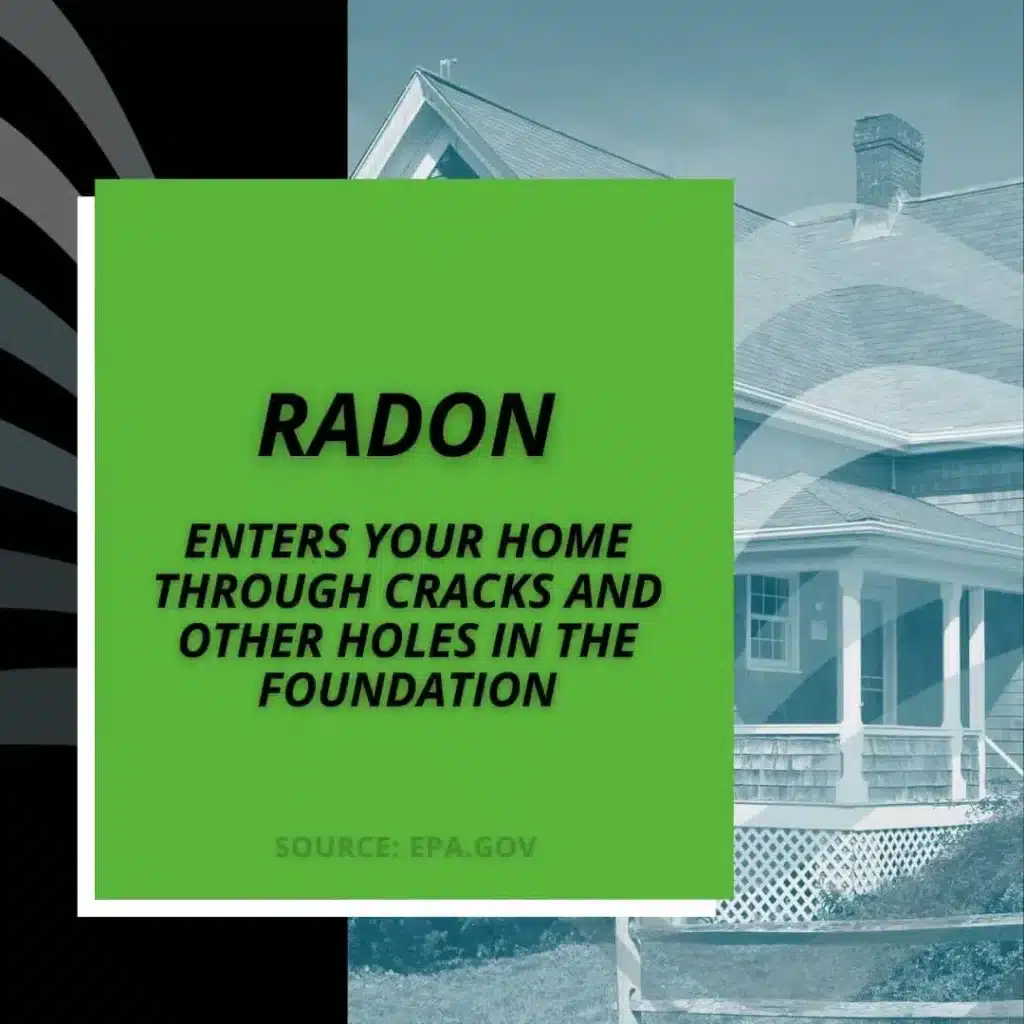
Your home acts like a vacuum, pulling that gas in through cracks in the foundation, gaps around service pipes, or even through the pores in concrete blocks.
Because modern homes are built to be energy-efficient and airtight, that gas gets trapped inside. Over time, it builds up to levels that can be hazardous. A radon test is the only way to confirm if your home is effectively venting this gas or if it is collecting in your living spaces.
Whether you have a crawlspace, a basement, or a slab-on-grade foundation, no home is automatically immune to radon entry.
How a Professional Radon Test Works
When you ask what a radon test is, you are usually looking at two main types: short-term and long-term. For most real estate transactions or initial home health checks in Pennsylvania, we use a short-term professional monitor. These devices are placed in the lowest livable level of the home for a minimum of 48 hours.
During this window, the device continuously samples the air. It tracks fluctuations in radon levels caused by changes in barometric pressure, wind, and temperature.
Once the testing period is over, a professional technician retrieves the device and analyzes the data to provide an average reading. This average is measured in picocuries per liter (pCi/L).
Understanding Your Radon Results
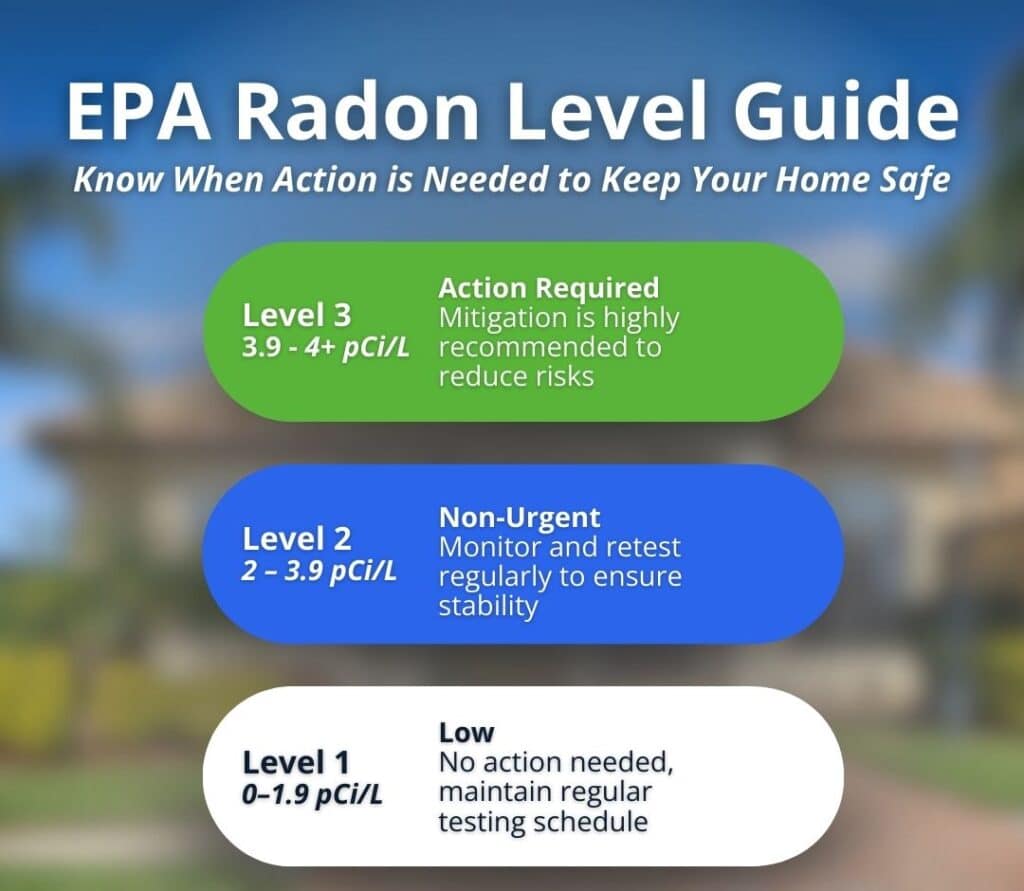
The Enviromental Protection Agency (EPA) has a specific action level for radon. If your test result comes back at 4.0 pCi/L or higher, it is time to take action.
However, even levels between 2.0 and 4.0 pCi/L carry some risk, and many homeowners choose to install a system to get those numbers as low as possible.
| Radon Level (pCi/L) | Risk Level | Recommended Action |
| Below 2.0 pCi/L | Low | Re-test every two years or after renovations. |
| 2.0 to 3.9 pCi/L | Moderate | Consider mitigation to lower the risk further. |
| 4.0 pCi/L and Above | High | Install a radon mitigation system immediately. |
In the Harrisburg area, it is not uncommon to see readings well above 10 or even 20 pCi/L. Because our local geography is so varied, your neighbor might have a low reading while your home has a high one. You cannot rely on someone else’s results to determine your own safety.
Why You Should Not Use a Store-Bought Kit
It is tempting to grab a cheap charcoal canister from a big-box store, but these are often less reliable than professional testing. DIY kits are highly sensitive to “user error.” If you place the kit in the wrong spot, leave a window open nearby, or fail to mail it to the lab immediately, your results might be inaccurate.
Professional testing uses calibrated electronic monitors. These machines are tamper-resistant and can detect if someone opened a window to try to lower the reading during the test. For something as serious as a cancer-causing gas, the accuracy of a professional report provides a level of certainty that a mail-in kit simply cannot match.
Common Entry Points for Radon Gas
Radon does not need a large opening to enter your home. It can find its way through:
- Sump pump pits that are not sealed
- Hairline cracks in basement floors or walls
- Gaps in floor-to-wall joints
- Loose-fitting pipe penetrations
- Porous cinder block walls
A professional radon test identifies the concentration, but a follow-up inspection can often pinpoint the most likely areas where the gas is entering. This is helpful information if you eventually need to install a mitigation system.
Radon Testing During a Real Estate Transaction
If you are buying a home in Central PA, a radon test is a standard part of the inspection contingency. Most lenders and buyers want to ensure the property is safe before the deal is finalized. If a test shows high levels, it is common for the buyer to ask the seller to pay for the installation of a mitigation system.
Even if you aren’t planning on moving anytime soon, testing is still a smart move. Radon levels can change over time as the ground shifts or as your home’s foundation settles.
The EPA recommends testing every two years to ensure your indoor air quality remains within a safe range.
Other Recommended Maintenance and Related Questions
Does radon testing involve any smells or loud noises?
No. A radon test is completely silent and does not release any chemicals or odors. The monitor simply sits in a room and “breathes” the air just like you do.
Can I stay in my home during a radon test?
Yes, you can stay in the home. However, you must keep “closed-house conditions.” This means keeping all windows and outside doors closed, except for normal entry and exit. You should also avoid using high-volume exhaust fans like attic fans during the 48-hour testing period.
Does a radon test check for mold or lead, too?
No. A radon test is specifically designed to detect radioactive gas. While we offer other inspections like mold assessment or lead-based paint testing, those require different tools and processes.
If I have a radon system, do I still need a test?
Yes. You should test your system at least every two years to make sure the fan is still working effectively and that the radon levels are still being kept below the action level.
When to Call a Professional
You should call a professional for a radon test if you have never tested your home, if it has been more than two years since your last test, or if you have recently finished your basement.
If you are noticing new cracks in your foundation or have completed major renovations that changed the footprint of your home, those are also key times to schedule a professional check.
Conclusion
Understanding what a radon test is the first step in ensuring your home is a healthy environment. In Harrisburg, radon is a local reality, but it is one that is easily managed once you have the right information.
By choosing a professional test, you get an accurate, tamper-proof look at your home’s air quality. Don’t leave your family’s health to chance or a cheap DIY kit. Reach out to a local expert today to schedule your test and get the peace of mind you deserve.