

To clean a bathroom sink drain and protect home value, remove buildup early, clean the drain safely, and address slow drainage before it leads to moisture, plumbing concerns, or inspection notes that can affect a real estate transaction.
A bathroom sink drain may seem like a small detail. In real estate and home inspections, small details often signal larger patterns.
Whether you are maintaining your home, preparing to sell, or buying a property, understanding how to clean a bathroom sink drain properly helps reduce inspection risks and protect both your investment and your peace of mind.
Why Bathroom Sink Drains Matter During Home Inspections
Home inspections focus on safety, function, and visible signs of neglect.
Bathroom plumbing directly affects all three areas because it involves daily water use, moisture exposure, and enclosed spaces where problems can go unnoticed.
Inspectors commonly:
- Run water to check drainage speed and flow consistency
- Look for leaks under sink cabinets and around fittings
- Note odors, stains, corrosion, or signs of past repairs
- Identify moisture conditions that could support mold growth
A slow or clogged drain may be documented as a maintenance concern. While it may not stop a sale on its own, it can:
- Trigger follow-up questions from buyers or agents
- Lead to requests for repairs, credits, or further evaluation
- Suggest deferred maintenance elsewhere in the home
In competitive real estate markets, even minor inspection notes can influence buyer confidence and negotiation leverage.
What Slow Bathroom Sink Drains Signal to Buyers and Inspectors
Buyers often read inspection reports carefully, especially first-time buyers who rely heavily on professional guidance. A slow drain can suggest more than simple hair buildup.
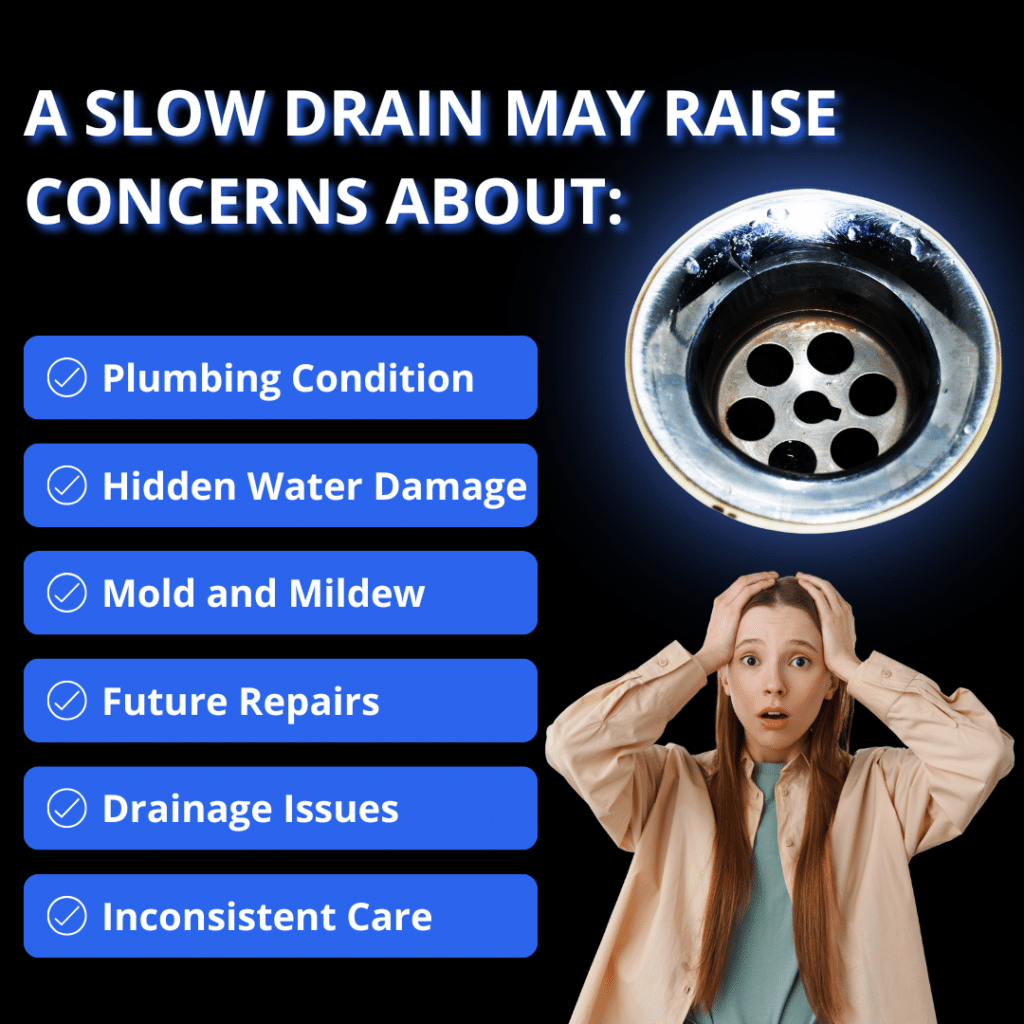
To buyers, it may raise concerns about:
- Overall plumbing condition and reliability
- Hidden water damage behind cabinets or walls
- Mold risk in damp, enclosed spaces
- Future repair or replacement costs
To inspectors, slow drainage can indicate:
- Inconsistent routine maintenance
- Possible venting or drainage design issues
- Early signs of moisture intrusion or leakage
Clean, functional drains help inspections move forward with fewer questions and reduce the chance of added scrutiny.
Common Causes of Bathroom Sink Drain Clogs
Knowing what causes clogs helps homeowners prevent issues and correct them before inspections.
Typical Buildup Sources
- Hair and skin cells from daily use
- Soap, toothpaste, and product residue
- Makeup, shaving cream, and grooming products
- Mineral deposits caused by hard water
Why Do Older Homes Clog More Easily?
Older plumbing systems often include:
- Narrower drain pipes
- Rough interior pipe surfaces that catch debris
- Aging fittings and seals that slow water flow
These factors allow buildup to collect faster, increasing the likelihood of slow drainage and moisture problems.
Early Warning Signs Inspectors Notice
- Water starts pooling in the sink bowl
- Gurgling sounds when draining
- Musty or sour odors near the cabinet
- Stains, warping, or softness under the sink
Addressing these signs early reduces inspection risk and repair costs.
How to Clean a Bathroom Sink Drain Safely at Home
Learning how to clean a bathroom sink drain is one of the most effective maintenance steps homeowners can take to prevent inspection issues.
Tools and Supplies Most Homeowners Have
- Rubber gloves
- Small bucket or container
- Adjustable wrench or pliers
- Baking soda and vinegar
- Old toothbrush or small scrub brush
- Clean cloth or paper towels
Step-by-step Drain Cleaning Overview
- Remove the sink stopper and clear visible debris.
- Pour boiling water slowly into the drain to loosen buildup.
- Add baking soda, followed by vinegar, and let it sit for 10 to 15 minutes.
- Flush the drain again with hot water.
- If drainage is still slow, remove the P-trap and clean it thoroughly before reinstalling it securely.
This approach removes common buildup without damaging pipes or fittings.
Why Gentle Methods Matter for Inspections
Aggressive cleaning methods can crack pipes, loosen joints, or cause leaks. Even a small drip under a sink can appear in inspection photos and reports and may raise moisture or mold concerns.
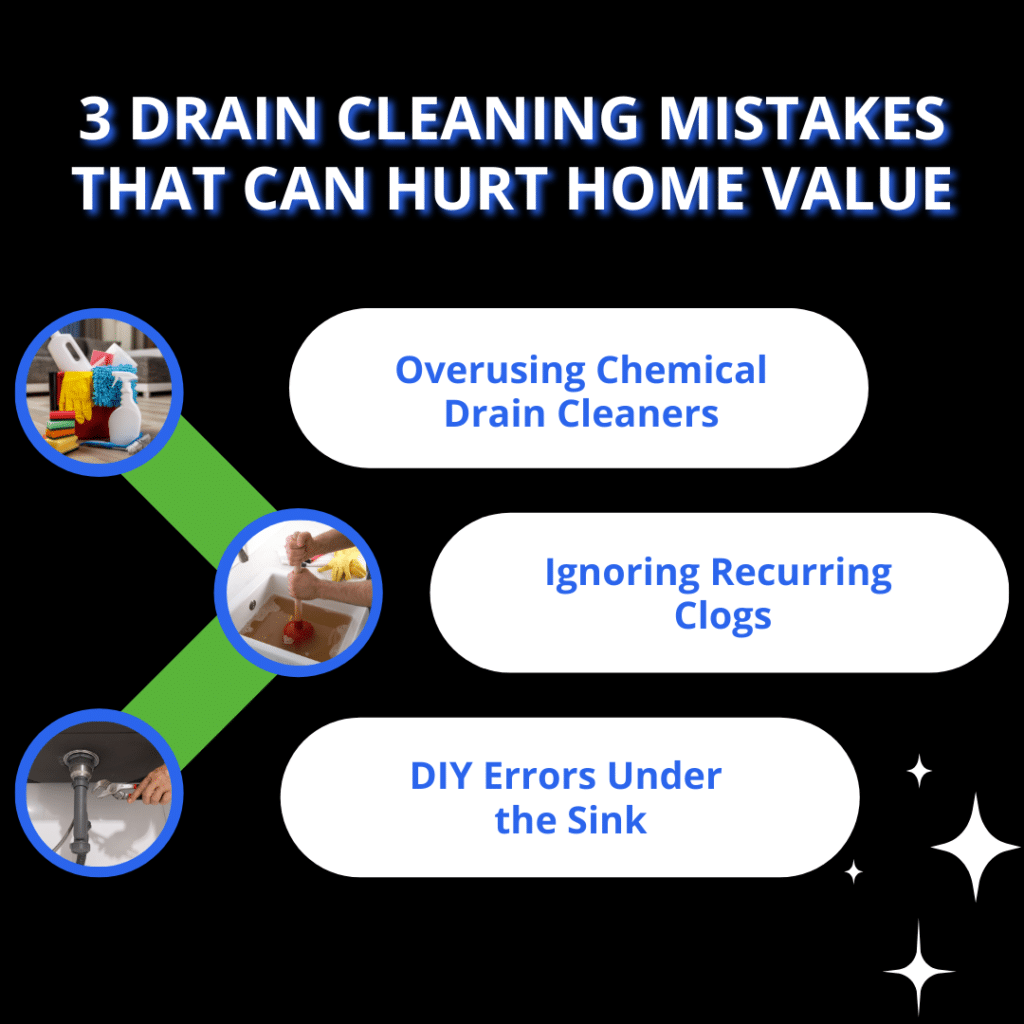
Mistakes That Can Hurt Home Value
Some common drain cleaning mistakes can create avoidable inspection findings.
1. Overusing Chemical Drain Cleaners
Chemical cleaners can:
- Damage to older or metal pipes
- Causes corrosion over time
- Hide deeper plumbing issues rather than solve them
Inspectors may note corrosion, residue, or leaks linked to repeated chemical use.
2. Ignoring Recurring Clogs
Repeated slow drains often point to:
- Venting problems
- Partial blockages in main drain lines
- Improper pipe slope or aging plumbing
Temporary fixes may delay the issue but rarely resolve it completely.
3. DIY Errors Under the Sink
Improper pipe reassembly can lead to:
- Leaks beneath cabinets
- Moisture stains on the flooring or walls
- Swollen or damaged cabinet materials
These issues frequently appear in inspection reports.
How Drain Maintenance Helps Prevent Moisture and Mold Issues
Bathroom drains and moisture are closely connected. Slow drains can create a moisture risk when:
- Water backs up or splashes during use
- Small leaks go unnoticed over time
- Damp cabinet interiors develop
According to the Environmental Protection Agency, mold can begin growing within 24 to 48 hours of moisture exposure.
Moisture under sinks may indicate:
- Active leaks
- Past water damage
- Conditions favorable for mold growth
Environmental inspectors often find mold in bathrooms where drain problems were left unresolved. Clean drains help control moisture and protect indoor air quality.
When a Bathroom Sink Drain Points to a Larger Plumbing Issue
Not all drain problems are minor. Signs of a deeper concern include:
- Multiple slow drains throughout the home
- Sewer odors coming from sinks
- Water backing up into tubs or toilets
- Frequent clogs despite proper cleaning
These signs may indicate vent blockages or mainline issues. Identifying them before listing or closing can prevent costly delays or renegotiations.
How Clean Drains Support Home Value During Real Estate Transactions
Clean drains play a quiet but important role in perceived home value.
For Sellers
- Fewer inspection notes
- Reduced buyer repair requests
- Stronger presentation of overall home maintenance
For Buyers
- Fewer hidden plumbing risks
- A clearer understanding of the system condition
- Greater confidence in long-term ownership
Homes that show consistent care tend to move through transactions more smoothly.
How Often Should Homeowners Clean Bathroom Sink Drains?
Routine maintenance reduces inspection risk and long-term repair costs.
| Home Type | Cleaning Frequency |
| Standard single-family home | Every 1 to 2 months |
| Homes with hard water | Monthly |
| Older homes | Monthly |
| Rental properties | Monthly or between tenants |
| Preparing to sell | Within 30 days of listing |
Following a regular schedule helps prevent buildup and catch problems early.
What Sellers Should Do Before a Home Inspection
Bathroom drains should be part of every pre-inspection checklist. Sellers should:
- Clean all bathroom sink drains
- Remove stored items from under sinks
- Check for stains, odors, or moisture
- Address slow drainage before inspection day
These steps reduce surprises and support smoother negotiations.
What Buyers Should Watch for During Walkthroughs
Buyers can identify early drain concerns before inspections. Buyers should:
- Run water and observe drainage speed
- Look under sinks for stains, warping, or dampness
- Notice any odors near cabinets
- Ask inspectors about moisture or plumbing findings
These observations help buyers make informed decisions.
Related Questions
How often should you clean a bathroom sink drain?
Monthly cleaning and small renovations works well for most homes, especially older properties.
Can slow drains lower home value?
Yes. They can raise inspection concerns that lead to repair requests or negotiation credits.
Do home inspectors test bathroom sink drains?
Inspectors typically run water to check drainage and look for leaks or moisture.
Are slow drains a sign of mold?
They can contribute to moisture conditions that allow mold to develop under sinks or behind walls.
When should a professional be called?
If clogs return quickly, multiple drains are affected, or moisture is present, professional evaluation is recommended.
Conclusion
Knowing how to clean a bathroom sink drain is a small step that can make a meaningful difference. Clean drains support positive inspection results, protect home value, and reduce moisture risks that concern both buyers and inspectors.
Routine maintenance paired with a professional inspection helps catch issues early and avoid costly surprises. If you are buying, selling, or maintaining a home, Enviroquest can help identify plumbing, moisture, and environmental concerns before they impact your investment.
Schedule your Enviroquest inspection today to move forward with confidence.