

That foggy film on your window glass every morning might seem like a minor seasonal inconvenience. Still, condensation inside windows is one of the most consistent early warnings a home gives before more serious moisture problems take hold.
Whether you own an older property or a recently built one, understanding what drives interior window condensation and how to address it correctly can protect both the structure of your home and guard against the health risks that follow prolonged indoor dampness.
What Window Condensation Actually Is
Condensation forms the moment warm, moisture-laden indoor air contacts a surface cooler than the air’s dew point. At that threshold, water vapor reverts to liquid and appears as droplets or a foggy film on your window glass. The location of that condensation matters enormously in terms of what it signals.
Condensation on the interior-facing glass surface typically means that indoor humidity is running too high relative to how cold the window surface is getting. This is most common during winter when outdoor temperatures drop and glass chills quickly.
Condensation forming between two panes of a double or triple-glazed unit is an entirely different problem. That pattern indicates a failed insulated glass unit seal where the inert gas fill has escaped, and outdoor air has taken its place, carrying moisture with it.
Understanding how long a full home inspection takes helps homeowners appreciate why inspectors invest real time evaluating every window assembly rather than moving past quickly.
The Main Causes of Interior Condensation

Several conditions inside a home consistently drive the appearance of condensation on interior window surfaces:
High Indoor Humidity
The EPA recommends maintaining indoor relative humidity between 30 and 50 percent to support both comfort and air quality. When humidity consistently exceeds that range, condensation becomes increasingly likely on any cooler glass surface during cold weather.
Everyday activities like cooking, showering, running the dishwasher, and doing laundry release significant moisture into indoor air continuously.
Insufficient Ventilation
Energy-efficient homes that are tightly sealed trap moisture inside without adequate air exchange. Bathrooms and kitchens are the most common problem zones, and even homes with exhaust fans can develop issues if those fans vent into attic or wall cavities instead of directly outside.
Following a thorough fall maintenance checklist before winter starts is one of the most practical ways to address ventilation gaps before conditions worsen.
Temperature Differentials at the Glass
Older single-pane windows and lower-quality double-pane units lose heat rapidly. When the indoor air sits at 68 to 72 degrees Fahrenheit and meets glass chilled to near-freezing temperatures, condensation is almost inevitable.
Homes that show signs of settling or shifting may also have misaligned frames that accelerate heat loss at the window assembly.
New Construction Moisture
Newly built or recently renovated homes embed moisture into lumber, drywall compound, and paint during construction. During the first heating season, the stored moisture releases into the living space, temporarily spiking indoor humidity.
This is normal in the short term but warrants monitoring if condensation persists beyond the first year.
Houseplants and Daily Lifestyle Habits
Houseplants continuously release moisture through transpiration, and grouping several plants near windows intensifies the effect. Reviewing typical home energy use habits often reveals overlooked daily routines that contribute meaningfully to humidity accumulation.
Health and Structural Risks That Follow
Persistent condensation is not a benign cosmetic issue. Left unaddressed, it creates a compounding cycle of moisture damage that grows in both cost and health consequences over time.
Mold and Mildew Growth
Condensation on window sills and the surrounding drywall creates ideal conditions for biological growth. Knowing the difference between mildew and mold matters because each requires a different remediation approach, and mold penetrates porous materials in ways that surface cleaning cannot resolve.
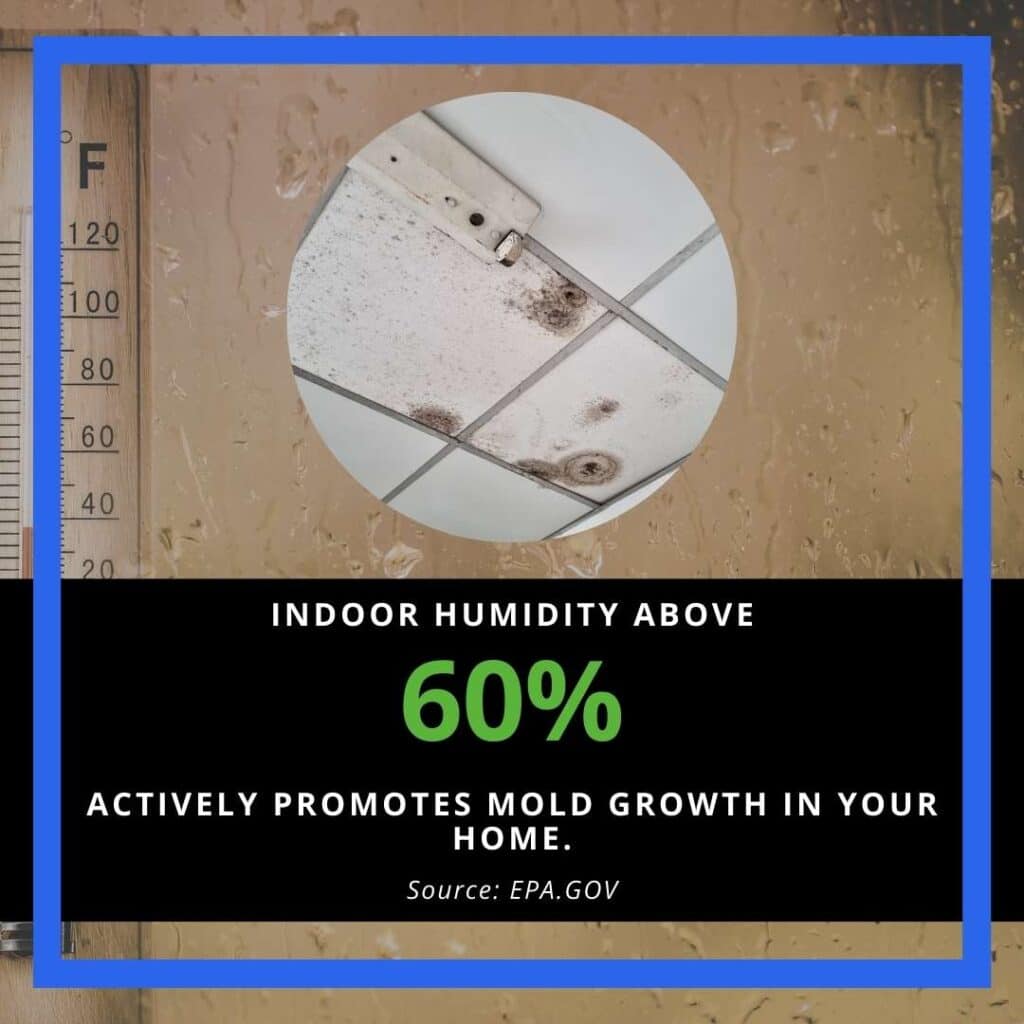
The EPA identifies indoor humidity above 60 percent as a level that actively promotes mold colonization, and studies referenced in EPA indoor air quality guidance indicate that building dampness raises the risk of respiratory and asthma-related outcomes by 30 to 50 percent.
An estimated 4.6 million of the 21.8 million asthma cases in the United States are attributable to dampness and mold exposure inside homes, according to EPA-associated research.
Wood Rot and Frame Deterioration
Chronic moisture at window frames and sills softens wood progressively. Rot that begins at a window sill can migrate into the surrounding rough framing and, in serious cases,s reach load-bearing structural members.
A thorough inspection that includes electrical checks alongside structural review can identify whether moisture damage has already spread into adjacent systems and expanded the scope of repairs needed.
Pest Attraction
Moisture-damaged wood and damp cavities created by chronic condensation are primary attractants for termites and carpenter ants.
Understanding how pests interact with moisture-damaged structures is important because pest damage and wood rot often advance simultaneously, making early detection through a professional inspection the most cost-effective intervention.
The Technical Corner
Professional inspectors use two specialized instruments to locate and measure moisture problems that are completely invisible to the naked eye during a standard walkthrough.
Thermal Imaging Cameras
A thermal imaging camera detects surface temperature differences rather than moisture directly.
Because wet building materials hold and release heat differently than dry ones, thermal images reveal cold spots, moisture pathways, and areas where condensation accumulates behind walls or beneath window aprons.
Inspectors rely on tools like thermal imaging in a home inspection to document moisture patterns across the full building envelope and to direct follow-up testing with precision.
Moisture Meters
Moisture meters measure the actual water content of materials like wood, drywall, and insulation. Pin-type meters use small probes inserted directly into a surface for a direct reading.
Pinless meters use electromagnetic signals to scan beneath surfaces without causing damage. Readings above approximately 19 percent moisture content in wood signal conditions favorable to mold growth and structural decay.
| Screening beneath the flooring and behind the drywall | What It Detects | Invasiveness | Best Used For |
|---|---|---|---|
| Thermal Imaging Camera | Surface temperature anomalies indicating moisture | Non-invasive | Scanning wide areas for hidden moisture patterns |
| Pin-Type Moisture Meter | Actual moisture percentage at material surface | Minimally invasive | Confirming elevated moisture in identified spots |
| Pinless Moisture Meter | Subsurface moisture via electromagnetic signal | Non-invasive | Screening beneath flooring and behind drywall |
A qualified home inspector brings both tools together with trained interpretation to build a reliable, documented moisture assessment of the entire property.
Condensation Location Guide
| Location | Primary Cause | Risk Level | Recommended Action |
|---|---|---|---|
| Interior glass surface | High indoor humidity or poor ventilation | Low to Moderate | Dehumidifier, improved exhaust ventilation |
| Between glass panes | Failed IGU seal, gas fill loss | Moderate | Window unit replacement |
| Exterior glass surface | Glass cooler than outdoor dew point | Low | Normal occurrence, no action needed |
| Window frame or sill | Chronic runoff, failed weatherstripping | Moderate to High | Seal repair, moisture remediation |
How to Fix and Prevent Condensation
Reducing interior window condensation does not always require major renovation. Several targeted measures produce meaningful results when applied consistently:
- Run bathroom and kitchen exhaust fans during activity and for at least 20 minutes afterward, ensuring they vent directly to the exterior
- Use a whole-home or room dehumidifier to maintain humidity between 30 and 50 percent, consistent with EPA indoor air quality recommendations
- Open blinds and curtains during daylight hours to warm glass surfaces and narrow the temperature differential that drives condensation
- Inspect and replace weatherstripping and window caulking each year before heating season begins
- Address clutter and storage habits that trap moisture against interior walls and in enclosed spaces
- Verify that crawl spaces and attics are properly ventilated, since moisture migrates upward from below-grade spaces into the living environment
Homeowners preparing for a real estate transaction or following up on persistent condensation will benefit from reviewing what a comprehensive home inspection covers before scheduling a professional evaluation.
How It Connects to the Whole Home
Interior window condensation is rarely an isolated symptom. The same humid conditions producing foggy glass are typically influencing attic decking, crawl space framing, insulation performance, and wall cavity moisture levels simultaneously.
Reviewing home inspection findings in their full context allows inspectors to connect isolated surface symptoms to systemic causes rather than treating each individually.
The Enviroquest team addresses all of these intersecting moisture and property health concerns within a single, structured assessment.
Related Questions
What level of indoor humidity causes condensation inside windows?
The EPA recommends keeping indoor relative humidity between 30 and 50 percent to prevent condensation and discourage mold growth. Humidity levels above 55 percent create a breeding ground for mold in addition to driving the persistent window condensation most homeowners overlook.
Does condensation between window panes mean the whole window needs to be replaced?
Condensation between glass panes signals a failed insulated glass unit seal rather than a problem with the entire window frame. A professional assessment can confirm whether resealing around windows addresses the issue or whether the glazing unit requires full replacement.
Can persistent window condensation lead to mold inside my walls?
Yes, it can. Studies link sustained indoor dampness to a significantly elevated risk of respiratory illness, and mold that begins in one area of a home can spread into adjacent spaces through shared air systems and structural cavities.
Conclusion
Condensation inside windows is your home delivering a clear message about its moisture health, and that message deserves a professional response.
Whether you are dealing with fogged glass every morning, preparing to buy or sell a property, or simply want a complete picture of how moisture is moving through your home, Enviroquest has the tools and expertise to give you answers. Schedule your inspection with the Enviroquest team today.