
You can tell pipes are frozen when a faucet runs slowly or not at all during cold weather. Other clues include frost on exposed pipes, odd smells from a drain, and gurgling noises.
Frozen water expands, and that pressure can split a pipe. At Enviroquest, we inspect homes across Harrisburg, Lancaster, and York, and we see what winter does to plumbing.
This guide covers the warning signs, what to do before a pipe bursts, and how to check for water damage and mold afterward.
How to Tell If Pipes Are Frozen
The clearest sign is a faucet that gives only a trickle, or nothing, when the weather is freezing. If it happens at one faucet, the freeze is likely in the line that feeds it.
If it happens at every faucet, the freeze may be near the main line.
Watch for these other signs:
- Frost on exposed pipes. A white, frosty coat on a pipe in a basement, garage, or crawl space means it is very cold.
- Bulging or cracked pipes. Ice can stretch a pipe before it breaks.
- Strange smells. A frozen drain line can trap odors and push them back into the house.
- Gurgling or banging. Trapped air and pressure can make noise when you run water.
- Wet spots or stains. A pipe that has already split may drip into a wall or ceiling.
If you see any of these, act fast. A frozen pipe has not always burst yet, but it can.
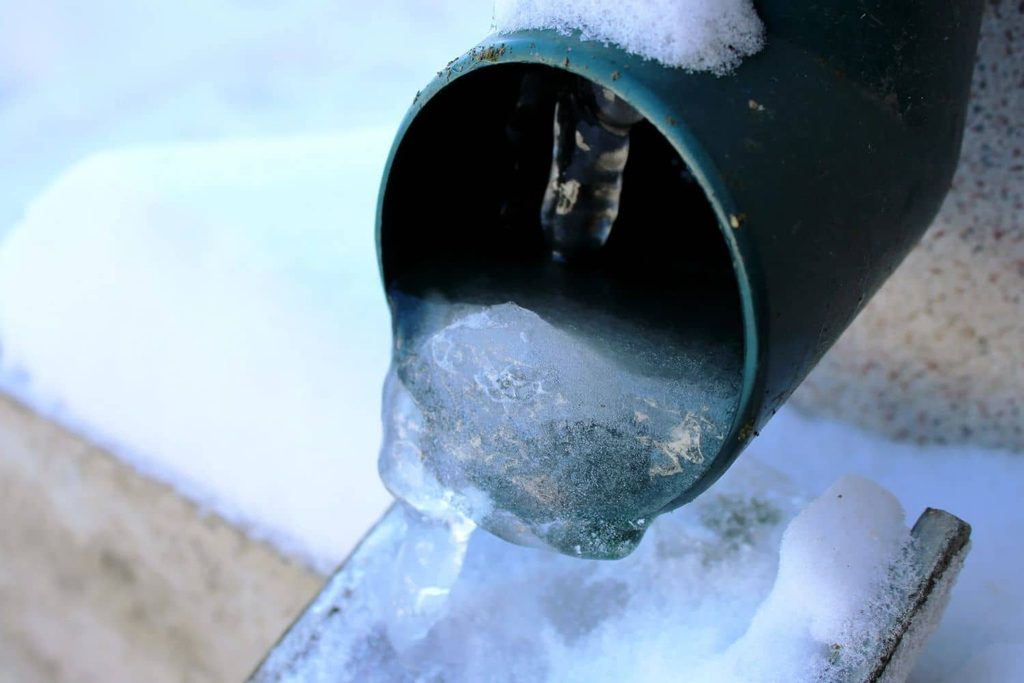
Which Pipes Freeze First
Pipes freeze when the temperature drops to about 20°F or lower for several hours. Wind and drafts speed that up. The most at-risk spots are:
- Pipes in exterior walls
- Lines in unheated basements, crawl spaces, and garages
- Outdoor spigots and hose bibs
- Pipes in attics, or under sinks on cold outside walls
Metal and plastic pipes can both freeze. If your water works in the kitchen but not in the basement bath, that clue can help you find the cold spot.
What to Do Before Pipes Burst
Quick action can save you from a flood.
If you think a pipe is frozen, follow these steps:
- Open the faucet. Leave it open so water can flow as the ice melts. Melting ice also relieves pressure.
- Find the frozen section. Look for frost, a bulge, or a cold spot along the pipe closest to the faucet that is not working.
- Apply gentle heat. Use a hair dryer, a heating pad, or warm towels. Start near the faucet and work back toward the frozen part.
- Add warm air to the room. Open cabinet doors under sinks, and run a space heater safely away from anything that can burn.
- Check for leaks as it thaws. Look for drips, wet drywall, and puddles.
- Call a plumber if you cannot find or thaw it. Do not keep trying if the pipe is behind a wall.
The American Red Cross has a helpful page on preventing and thawing frozen pipes.
What Not to Do
Some quick fixes make things worse.
Avoid these:
- Never use an open flame. A torch, propane heater, or lighter can start a fire or damage the pipe.
- Do not use boiling water on a cold pipe. Sudden heat can crack it.
- Do not leave the water on and walk away. Stay close so you can spot a leak.
- Do not assume a thawed pipe is safe. It may have a crack that only leaks once the water flows again.
What to Do If a Pipe Bursts
If water is spraying or pouring in, move quickly:
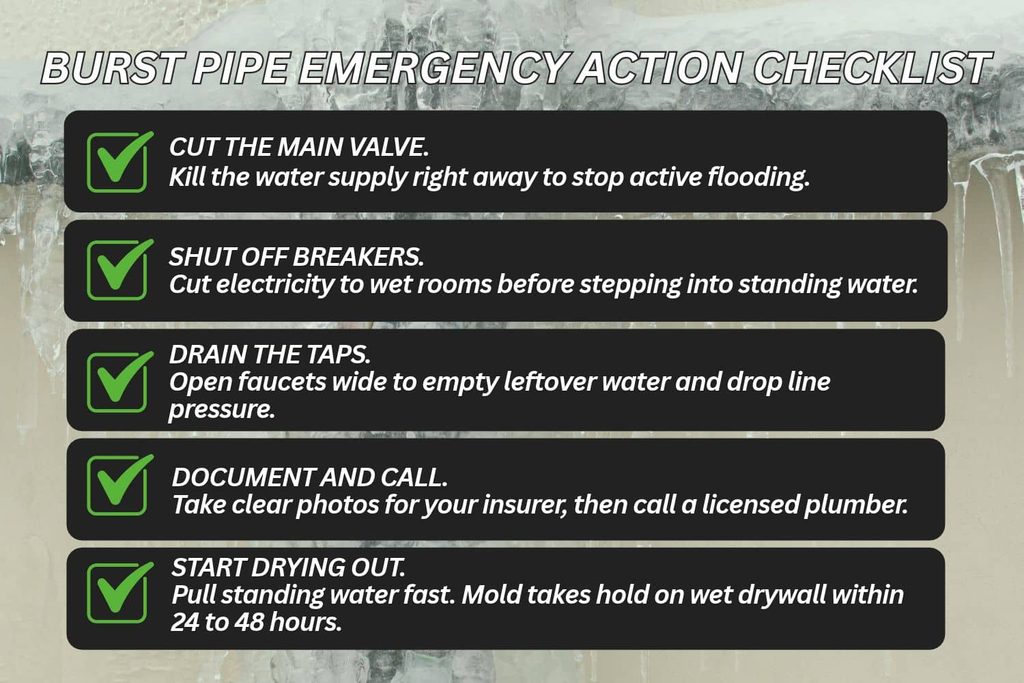
- Shut off the main water valve.
- Turn off the power to wet areas if you can do so safely. If water is near outlets or panels, stay out and call an electrician.
- Open faucets to drain the lines.
- Take photos for your insurance claim.
- Call a licensed plumber.
- Start drying the area right away.
Water Damage and Mold After a Frozen Pipe
A leak can do more harm after the water is gone. Wet drywall, insulation, and carpet can grow mold fast. The EPA advises drying wet materials within 24 to 48 hours to prevent mold growth.
Look for these signs in the days after a freeze:
- A musty smell in a room that was fine before
- Stains or bubbling paint on walls and ceilings
- Soft, warped, or stained flooring
- A jump in your water bill, which can point to a hidden leak
Hidden damage can sit inside walls for weeks, and small stains often turn into bigger repairs the longer they’re ignored. Learning about the risks of ignoring water damage on the ceiling can help you catch problems early.
If you smell mold or can’t find the source, mold testing can tell you whether spores are in the air. Keep in mind that testing doesn’t replace drying out the home. And if cost is a concern, it helps to know who pays for mold remediation before you start.
How a Home Inspection Checks Plumbing
A home inspection is a good way to spot freeze risks before winter.
An inspector looks at the plumbing that can be seen and tested, including:
- Water pressure and flow at fixtures
- Visible supply and drain pipes for leaks, corrosion, and damage
- Water stains on ceilings, walls, and under sinks
- Exposed pipes in basements, crawl spaces, and garages that lack insulation
- Outdoor spigots and the water heater
- Signs of past leaks or moisture
An inspection has limits. Inspectors cannot see inside walls or under slabs. That is why a clean report does not rule out hidden damage. If you suspect a leak, ask a plumber to check.
A pre-winter inspection also helps buyers. If you are buying an older home, ask about pipe insulation and past leaks before closing. Our post on when to walk away after a home inspection explains how to weigh serious findings.
How to Keep Pipes From Freezing
A few small steps lower your risk:
- Insulate exposed pipes. Foam sleeves or heat tape protect pipes in cold spaces.
- Seal drafts. Close gaps where pipes enter the house, and keep garage doors shut.
- Disconnect hoses. Drain outdoor spigots before freezing weather.
- Let faucets drip. On extreme cold nights, a slow drip keeps water moving.
- Keep the heat on. Set the thermostat at 55°F or higher, even when you are away.
- Open cabinet doors. Warm air can reach pipes on outside walls.
Related Questions to Explore
At what temperature do pipes freeze?
Pipes can freeze when the outside temperature drops to about 20°F or lower for several hours. Wind and poor insulation make it more likely.
How long does it take for pipes to freeze?
It depends on the cold, the wind, and how well the pipe is protected. Pipes on an exterior wall or in an unheated space can freeze within hours of a hard freeze.
Will frozen pipes thaw on their own?
Sometimes, when the weather warms up, but waiting is risky, since the ice can crack a pipe that only leaks once it thaws. Check for leaks after the thaw.
Do frozen pipes always burst?
No. Many freeze and thaw without breaking. Pressure builds between the ice and the faucet, so the break often happens where the ice has stretched the pipe.
How long does it take to thaw a frozen pipe?
Gentle heat can take from a few minutes to an hour or more, depending on the ice and the pipe. If it is not flowing after about an hour, call a plumber.
Why is my water cloudy or brown after a freeze?
Plumbing repairs and pressure changes can stir up sediment. If the discoloration lingers, you can clean sediment from your water lines to help clear it up.
Can a home inspector find freeze damage?
They can spot visible leaks, stains, and poorly protected pipes. They cannot see inside walls, so a plumber may need to confirm hidden problems.
When to Call a Professional
Some freezes are not a do-it-yourself job. Call a plumber if:
- The frozen pipe is behind a wall, under a slab, or hard to reach
- A pipe has cracked, bulged, or started to leak
- Water will not flow after you have tried gentle thawing
- You cannot find the freeze, or several fixtures are affected
After the plumber stops the leak, call us for the next step. Enviroquest can inspect the plumbing and visible damage and test for mold if the home smells musty or stayed wet.
We serve Harrisburg, Lancaster, York, and the surrounding area within about an hour of our Harrisburg office. See our service areas or call us.
Conclusion
- Slow or no water in cold weather, frost, and odd noises or smells are the top signs of frozen pipes.
- Open the faucet, thaw with gentle heat, and never use an open flame.
- Dry wet areas fast, and test for mold if you smell it or the damage is hidden.
Want a second set of eyes on your plumbing before the next freeze? Schedule a home inspection with Enviroquest and find weak spots before winter does.