
A sump pump is your home’s primary defense against groundwater, yet it often goes unnoticed until it fails during heavy rain or rapid snowmelt.
Although many common issues are easy to identify and fix, you should never ignore a malfunction. Water on a lower level rarely stops at just being a puddle. It can lead to mold growth, structural damage, and even increased radon levels.
Because most standard insurance policies do not cover damage from pump failure, regular maintenance is vital to protecting your investment and keeping your home dry.
The Crucial Role of Your Sump System
A sump pump sits in a sump pit or sump basin at the lowest point of your home. This is where groundwater naturally collects as it rises or moves through the soil.
The sump pump systems monitor the water level in the pit. When the water reaches a certain height, the pump activates and moves the water out through a discharge pipe, away from your home’s foundation.
In Central Pennsylvania, this system is vital. Harrisburg sits right near the Susquehanna River. The surrounding areas, like York, Lancaster, Lebanon, and Hershey, often deal with high groundwater pressure.
If you live in a low-lying area or on clay-heavy soil, your home is at a higher risk for water damage. A working pump helps control humidity and reduces the damp conditions that allow mold to thrive.
When the pump stops, that protection disappears immediately.
Data from geological surveys shows that the Susquehanna River basin is prone to rapid water table shifts. This means groundwater can rise faster than the soil can drain it away.
This pressure, called hydrostatic pressure, can actually push water through solid concrete over time if your system is not working properly.
Most Common Causes for Sump Pump Failure
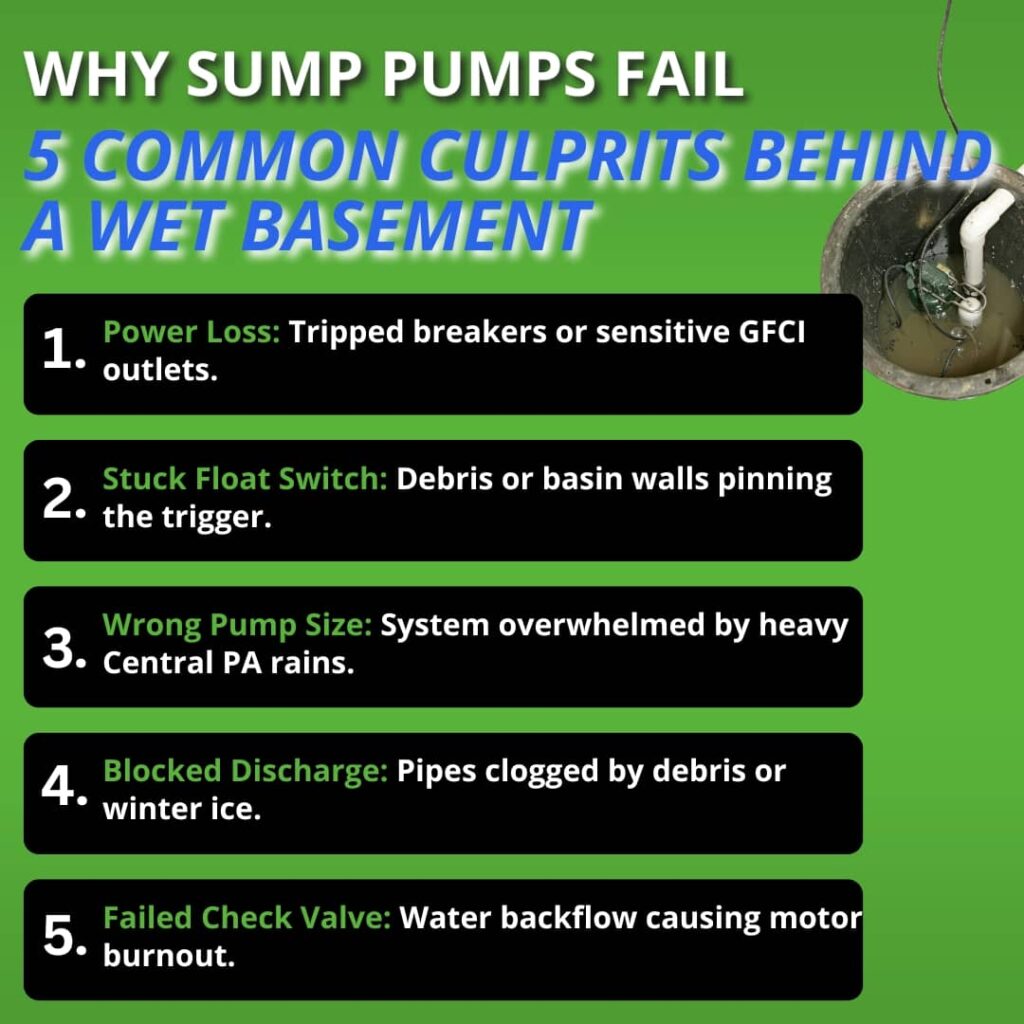
Knowing why a sump pump not working is the first step toward a dry home. While there are many common sump pump problems, most fall into these five categories:
- Power Supply Issues: This is the most frequent reason a pump stops. Check for a tripped circuit breaker or a gfci outlet that has clicked off. These outlets are sensitive to moisture and often trip during heavy Central PA storms.
- A Stuck or Faulty Float Switch: The float switch acts like the ball in a toilet tank. It must rise to tell the motor to start. If it is a stuck float switch pinned against the sump basin or tangled in debris, the pump will never turn on.
- An Undersized Pump: Sometimes the system is simply overwhelmed. In areas like Mechanicsburg or Enola, massive rain events can bring in more water than an undersized pump can handle. The pump runs continuously, but the water level keeps rising anyway.
- Blocked or Frozen Discharge Pipe: If the discharge pipe is clogged, the discharge line is full of sticks or dirt, or the water has nowhere to go. In our local winters, a blocked discharge pipe is often caused by ice. The water just sits in the sump pit while the motor strains to move it.
- A Malfunctioning Check Valve: This valve keeps water from falling back into the sump after the pump shuts off. If you have a faulty check valve, the water flows right back down. This leads to short cycling, which causes the motor to turn on and off too often and burn out quickly.
Deep Dive: Mechanical Failures and Logic
Understanding the mechanics of your pump can save you from a flooded basement. For example, air can sometimes get trapped in the impeller casing.
The impeller is the spinning part that pushes the water. Air trapped in the pump’s impeller casing can prevent it from creating the necessary suction to move water.
This is called an air lock. Most sump pump systems need a small hole drilled in the discharge pipe to let air escape. Without this, the pump might hum but won’t actually move any water.
Another common mechanical issue is a clogged intake screen. The bottom of the pump has a screen to keep out gravel. If your sump pit has a lot of silt or debris, this screen can get covered.
When the intake is blocked, the motor will strain to pull in water. This often sounds like a loud hum or a vibrating noise. If you hear this, you must clean the basin immediately to avoid burning out the motor.
Troubleshooting Checklist: How to Test the Pump
You can often troubleshoot a sump pump not working on your own before paying for a service call. Follow these steps to narrow down the problem.
- Verify Power: Ensure the pump is receiving power. Test the gfci outlet by plugging in another small device. Reset any tripped breakers in your main electrical panel.
- The Float Test: Look into the sump pit. Reach in and try manually lifting the float. If the pump activates, you know the motor is good, but the float was likely stuck. Make sure it moves freely.
- Pouring Water: You can test the pump by pouring water into the sump pit. Use a large bucket or a garden hose. Watch to see if the pump turns on and if the water actually leaves the basin.
- Listen Closely: A pump should hum, but it should not make strange noises. If you hear an unusual noise like grinding or loud rattling, there may be a problem with the impeller or the motor.
- Inspect the Discharge: Trace the discharge pipe to where it exits your home. Check for a blocked discharge pipe caused by debris or ice. If the pipe is blocked, the water will never leave your home.
| What do you see or hear? | Possible Cause | Immediate Action |
| Pump makes no sound | No power | Check gfci outlet and circuit breaker |
| Pump hums but water stays | Clogged intake or impeller | Clear the intake screen and debris |
| Pump turns on and off quickly | Malfunctioning check valve | Inspect or replace the check valve |
| Water is flowing back into pit | Check valve failure | Ensure the valve is closing properly |
| Pump runs but never stops | Stuck float or blocked discharge | Free the float or check the exterior pipe |
Strategic Home Health: Beyond the Wet Floor
A sump pump failure is a signal that your home’s health is at risk. At Enviroquest, we look at the whole house. A broken pump is often just the beginning of other issues that require specialized testing.
The Moisture and Mold Connection
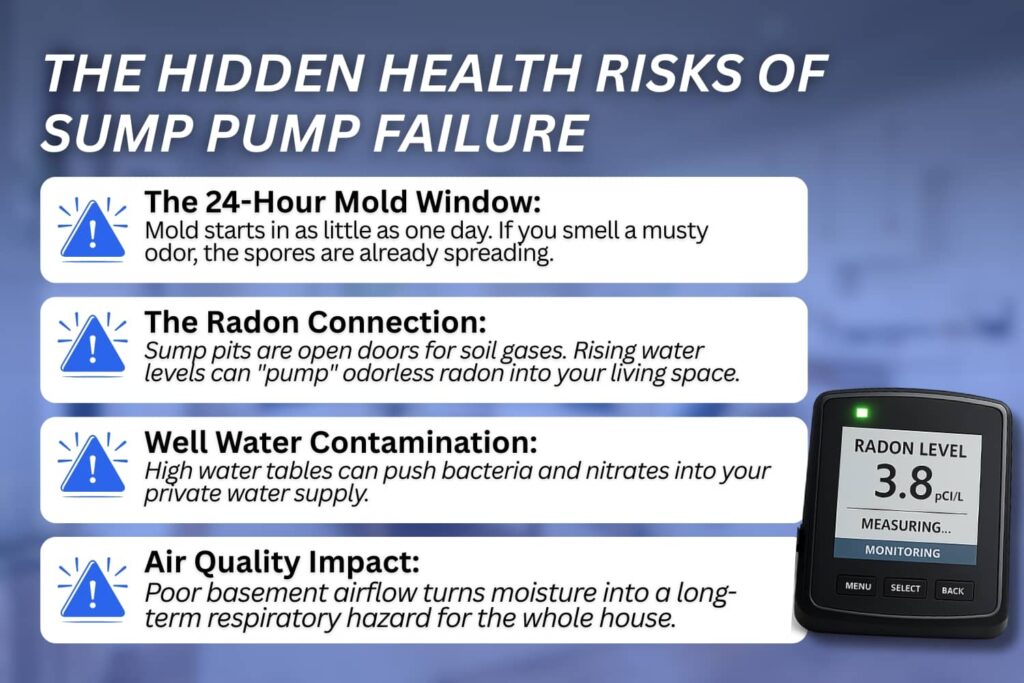
Mold growth is the most immediate concern after a pump fails. Mold can begin to grow within 24 to 48 hours of moisture exposure. Lower levels of the home are often dark and have poor airflow, which is exactly what mold likes.
If your sump pump fails, you must dry the area out immediately to avoid water damage. If you smell a musty odor, you may already have a mold problem. We provide professional mold testing to see how far spores have spread and if the air quality is safe.
Radon Entry and Soil Gases
Pennsylvania has some of the highest radon levels in the country. Radon is an odorless gas that comes from the soil. The sump pit is essentially a large hole in your home’s foundation.
If the pit is frequently wet or if the soil around it is saturated, it can create a path for radon to enter more easily. When the water level rises and falls, it can act like a pump, pushing soil gases up into your living space.
We recommend radon testing after any major water event or if you notice new cracks in your foundation.
Water Quality in Rural Areas
In rural areas around Lancaster and York, many homes rely on well water. Significant groundwater issues that overwhelm a sump pump can also affect your well. High water tables can lead to surface runoff entering your water supply. This can introduce bacteria or nitrates.
If your basement has flooded, it is a strategic time to perform water quality testing to ensure your drinking water remains safe.
Maintenance That Prevents Failure
Regular testing of sump pumps is recommended, especially before spring rains, to prevent failure. Most sump pump systems fail because they are ignored for years.
Testing your sump pump at least twice a year by pouring water into the sump pit can ensure it activates and ejects water properly, helping to identify any issues early on.
Keeping the sump pit clean is essential. Dirt, gravel, and debris can build up and block the intake screen.
If the intake screen is blocked, the pump has to work much harder and will eventually burn out. It is also wise to inspect the discharge pipe for any signs of sagging or damage to prevent clogs.
The Role of a Battery Backup
A battery backup is one of the smartest things a homeowner in Central PA can install. During a major storm, power outages are common. If the power fails, your primary pump stops working.
A backup pump runs on a battery and will take over when the main pump loses power or becomes overwhelmed. This is a critical layer of protection for any home in our region.
Other Related Questions
Can a one-time pump failure cause long-term mold problems?
Yes. Mold spores can begin to colonize damp materials like drywall, baseboards, and insulation in as little as 24 to 48 hours. If water sits in your basement for more than two days, the risk of hidden growth is high. Professional mold testing can determine if the indoor air quality has been compromised even after the standing water is gone.
Does a sump pit increase the risk of radon in a house?
It can. Because a sump pit is a direct opening in your home’s concrete slab, it acts as a primary entry point for radon gas. In Central Pennsylvania, soil gases move easily through the ground and into these openings. Keeping your sump pit covered with an airtight lid is a simple way to help manage these levels, but regular radon testing is the only way to ensure the air is safe.
Is a sump pump inspection included in a standard home inspection?
A thorough home inspection always includes a look at the sump system. The inspector checks the pump’s operation, the condition of the pit, and the discharge location. They also look for red flags like water stains or salt deposits on the walls, which might suggest the current pump is undersized or that the basement has a history of moisture issues.
Can heavy groundwater affect the safety of well water?
If your home uses a private well, a high water table can sometimes lead to water quality issues. When the ground is saturated enough to overwhelm a sump pump, surface runoff can occasionally find its way into the well system. This can introduce bacteria or nitrates into your drinking water, making a water quality test a smart move after any significant flooding event.
When to Call a Professional
If you have worked through the troubleshooting steps and your pump still isn’t pumping water, it is time to call for help. You should call a professional to replace the system if:
- The pump is receiving power but will not turn on.
- The motor makes a grinding or loud vibrating sound.
- The pump runs but the water level in the pit does not go down.
- You see signs of mold growth or a persistent musty smell.
- The discharge pipe is underground and appears to be clogged.
If your home has already flooded, you need to act quickly to prevent flooding in the future. Once the water is gone, having a professional evaluate the moisture level is a smart move. If the issue persists, it may be time to install a more powerful system.
Conclusion
A sump pump not working is a major stressor for any homeowner. In Central Pennsylvania, our weather and soil conditions make a properly functioning sump pump a necessity.
By doing regular testing and staying on top of maintenance, you can avoid water damage and keep your home healthy.
Enviroquest has been serving homeowners in Harrisburg, Lancaster, York, and the surrounding areas since 1991. We understand the local geology and the unique challenges our homes face.
We offer mold testing, radon testing, and water quality testing to ensure your entire living environment is safe.Do not wait for the next heavy rain to find out if your pump works. Schedule an inspection or a test today.