
You can clean your gutters without a ladder by using ground-level tools like a gutter cleaning wand, a leaf blower attachment, a wet/dry vacuum, or a telescoping pole with a scoop.
These tools let you clear leaves and debris while keeping both feet on the ground.
At Enviroquest, we see the water damage that clogged gutters cause across Harrisburg homes, and we also know most homeowners have no interest in balancing on a ladder to prevent it.
The good news is you often do not have to. Below, we walk through the safest ground-level methods, the gear you still need, and when the job is better left to a pro.
Can You Really Clean Gutters Without a Ladder?
Yes. Ground-level gutter cleaning works well for light to moderate debris, and it is far safer than climbing.
Ladder falls are a leading home-maintenance injury: federal safety research has found that a large share of fatal falls involve a ladder, and hundreds of thousands of people are treated for ladder-related injuries each year.
Staying on the ground removes that risk entirely.
The trade-off is reach and visibility. From the ground, you cannot always see inside the gutter, so the work takes a little longer and you may need to check your results with a phone camera on a pole.
For single-story homes and most standard two-story gutters, the tools below get the job done.
6 Ways to Clean Gutters From the Ground
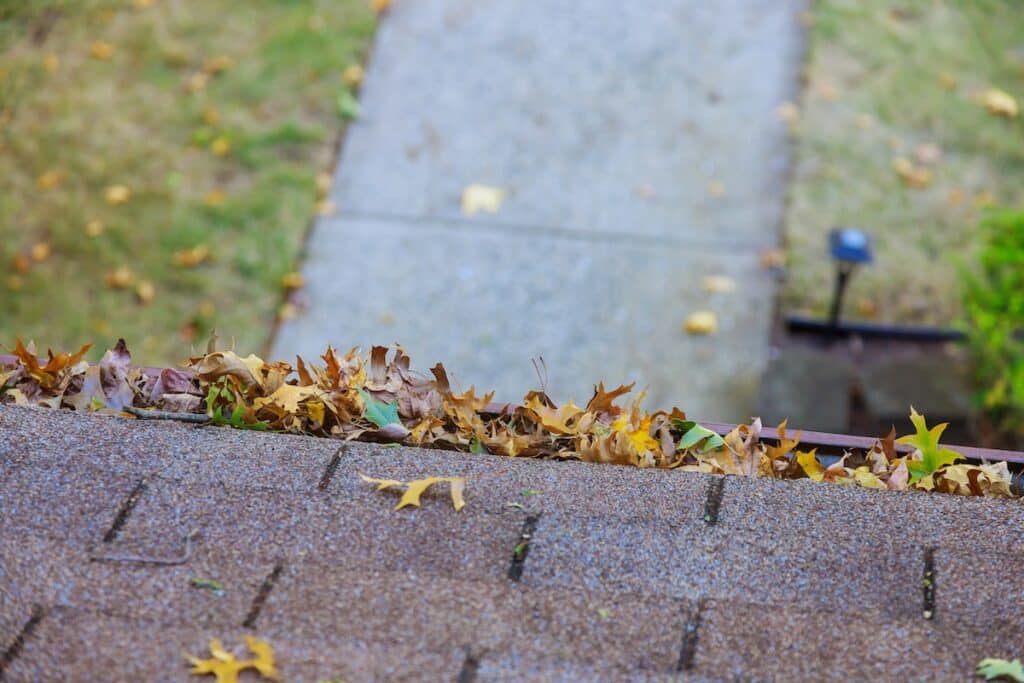
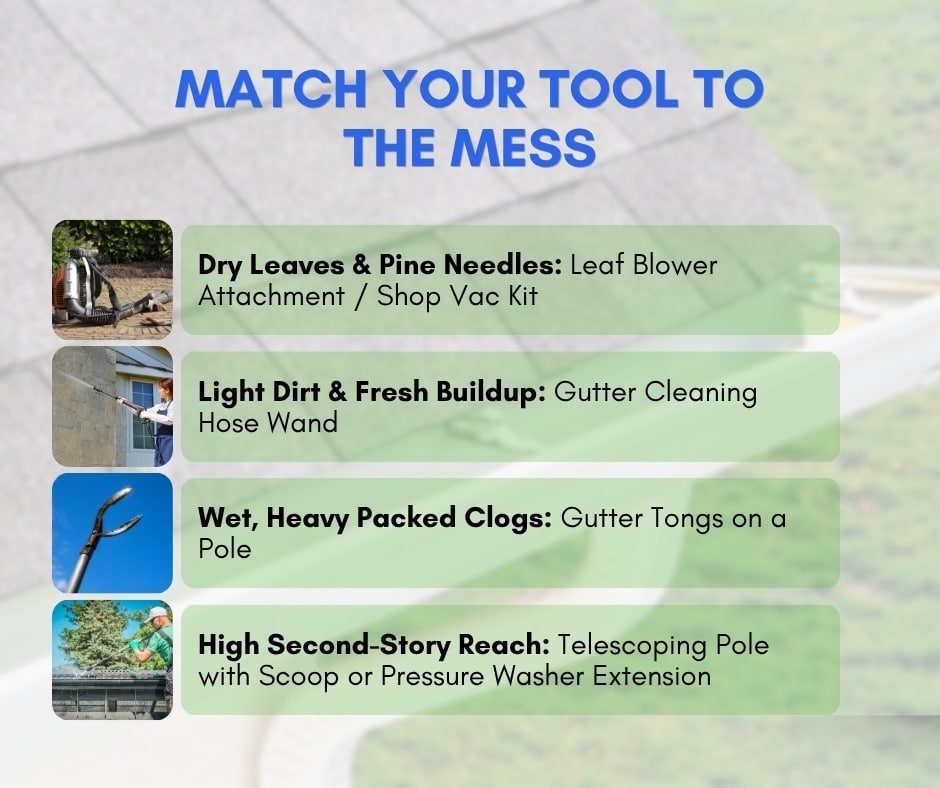
The right method depends on how clogged your gutters are and how high they sit. Dry leaves and pine needles clear easily with air or suction.
Wet, packed debris usually needs water pressure or a grabbing tool. Here are the six most reliable options.
1. Gutter Cleaning Wand on a Garden Hose
A gutter cleaning wand is a curved attachment that screws onto a standard garden hose. Water pressure flushes leaves and grime toward the downspout while you stand below.
Wands are inexpensive and easy to use, which makes them a great starting point.
They can struggle with heavy, wet clogs, and you will likely get splashed, so save this method for lighter buildup and warmer days.
2. Leaf Blower With a Gutter Attachment
A curved nozzle kit turns most leaf blowers into a ground-level gutter tool. The high-velocity air blasts dry leaves, twigs, and dirt out of the trough.
This method is fast and works best on gutters filled with dry, loose debris. Keep a rake handy, because everything you blow out lands in the yard. Avoid it right after rain, when wet debris will not budge.
3. Wet/Dry Vacuum With an Extension Kit
A wet/dry (shop) vacuum fitted with a gutter extension kit sucks debris straight into the tank, which keeps the mess contained.
This is the tidiest option and handles dust, leaves, twigs, and pine needles well. Kits with a curved end can reach up to two-story gutters.
Start at the end farthest from the downspout and work toward it, then flush with a hose to finish.
4. Gutter Tongs on a Telescoping Pole
Gutter tongs grab and lift debris out of the trough using a rope-operated claw on an extendable pole. They are the best choice for wet, heavy clumps that air and suction cannot move.
Tongs depend on your hand and arm strength, so they take more effort, but they give you real control over stubborn material on higher gutters.
5. Telescoping Pole With a Scoop or Brush
A telescoping pole fitted with a gutter scoop or soft brush lets you dig out debris and scrub the outside of the gutter face.
Before you buy, measure how high your gutters sit in more than one spot, since roof slope changes the height. Match the pole length to your tallest gutter so you are not overreaching.
6. Pressure Washer (Use With Caution)
A pressure washer with an extension wand clears clogs quickly and reaches second-story gutters. It is powerful, so it comes with risk.
Use a low setting, generally between 1,200 and 1,800 PSI, to avoid denting gutters or forcing water under your roofline. If you are unsure, a garden-hose wand is the gentler choice.
Safety Gear You Still Need on the Ground
Staying off the ladder removes the biggest hazard, but debris and water still fall toward you. Protect yourself with a few basics:
- Safety glasses or goggles to keep grit and cleaner out of your eyes
- Work gloves for grip and to protect your hands
- A hat or hard hat and long sleeves so falling debris does not reach your skin
- Non-slip shoes, since the ground gets wet fast
Work in small sections, keep the area below you clear of kids and pets, and stop if wind is blowing debris back at you.
How Often Should You Clean Your Gutters?
Most homes need gutter cleaning twice a year, in late spring and late fall. Homes surrounded by pine or oak trees often need it three to four times a year because needles and small leaves pack in quickly.
It is also smart to check your gutters after a strong storm drops branches and leaves across your yard.
Skipping this maintenance is what leads to the problems we find during inspections: overflowing water pools against the foundation, seeps into basements, and rots fascia and siding. A little routine cleaning prevents repairs that cost thousands.
Related Questions to Explore
Is it safe to clean gutters without a ladder?
Yes, and it is safer than using one. Cleaning from the ground removes the fall risk that makes ladder work the most dangerous part of the job. You still need eye protection and gloves because debris and water fall as you work.
What is the best tool to clean gutters from the ground?
There is no single best tool; it depends on the debris. A gutter cleaning wand or leaf blower attachment handles light, dry material. A wet/dry vacuum keeps the mess contained. Gutter tongs are best for wet, packed clumps. Many homeowners keep two options on hand.
How do you clean second-story gutters without a ladder?
Use a telescoping pole system, a pressure washer with an extension wand, or a wet/dry vacuum with long-reach poles. Measure your gutter height first so your tool actually reaches. Second-story work from the ground is slower and harder to verify, which is often where hiring a pro pays off.
Can you use a pressure washer to clean gutters?
Yes, with caution. Keep the pressure in the 1,200 to 1,800 PSI range and use an extension wand designed for gutters. Too much force can dent the trough, loosen fasteners, or push water under the roofline. If your gutters are old or fragile, choose a garden-hose wand instead.
How much does professional gutter cleaning cost?
Professional gutter cleaning typically runs from about $100 to $350 per visit, with single-story homes at the low end and multi-story or heavily clogged homes at the high end. Because most homes need cleaning twice a year, plan for roughly $200 to $700 annually. Access difficulty and gutter length drive the price.
Do gutter guards mean I never have to clean gutters again?
No. Gutter guards reduce how often you clean, but they do not eliminate it. Fine debris, shingle grit, and pollen still collect over time, and guards themselves need occasional clearing. Think of them as less maintenance, not zero maintenance.
When to Call a Professional
Ground tools handle routine cleaning, but some situations call for a pro. Reach out when your gutters are on a steep or three-story roofline, when debris is packed and wet beyond what your tools can move, or when you notice sagging sections, leaks, or water staining the siding.
Those signs often point to a gutter or roof problem that a simple cleaning will not fix.
If you are in the Harrisburg area and are not sure whether your gutters are draining properly, a home inspection is a smart next step.
During a complete home inspection, our team checks how your roof and gutters work together, flags drainage issues before they reach your foundation, and can point you to a reputable local gutter service.
It is the same drainage chain that affects your basement sump pump and shows up in problems like attic condensation.
Conclusion
Cleaning your gutters without a ladder is safer, cheaper than an ER visit, and completely doable with the right ground-level tools. A few takeaways to remember:
- Match the tool to the debris: air or suction for dry, water pressure or tongs for wet.
- Wear eye protection and gloves, and clean twice a year at a minimum.
- Call a pro for high, steep, or damaged gutters, or when you spot signs of drainage trouble.
Want to be sure your gutters and roof are protecting your home the way they should? Schedule a home inspection with Enviroquest in Harrisburg, PA, and get a clear picture of your home’s drainage from the ground up.